
The Saltillo Affair: When Portugal Beat England and Went to War With Themselves
How a row over bonuses and a dusty Mexican base camp wrecked the most talented Portugal side in twenty years.

Every England supporter of a certain age can tell you about that afternoon in Monterrey, on the third of June 1986. It was England’s World Cup opener. Bobby Robson’s team were a fancied England side, but they were undone by a single Portuguese goal fifteen minutes from time, thanks to Carlos Manuel. What almost none of those England fans could tell you is that the men who beat them had spent the previous fortnight at war with their own federation. They refused to train, they threatenedto walk and behaved like a squad who would rather be almost anywhere than Mexico. That war had a name.
The Saltillo Affair
Saltillo is a dusty Mexican city in the northern state of Coahuila, and it was where Portugal pitched up for what should have been the proudest summer in a generation. This was only their second World Cup, the first since the Eusebio side finished third in 1966, and they had earned their place the hard way.
Carlos Manuel scored the goal in Stuttgart that booked the ticket to Mexico. Portugal beat a West Germany side who had never lost a World Cup qualifier at home. A golden crop was emerging too, fronted by a twenty year old Paulo Futre, a year away from a European Cup and a Ballon d’Or runner up finish. The talent was real, national jubilation didn’t last and the organisation around it was a disgrace.
The Shenanigans started to unravel before Portugal had even left for the heat of Mexico. As the squad prepared to fly out, the Benfica captain Antonio Veloso was named on a positive test for an anabolic steroid. The result was later overturned and proven wrong, but the damage was done and Veloso never kicked a ball at the tournament. He has always insisted the sample was never his, that “those analyses weren’t mine”, and that the whole business was a scheme to keep him at home. Whoever was behind it, the effect was the same. Portugal had lost a defender and found a grievance before a ball was kicked.
Then came Saltillo itself. The federation booked the squad onto three sperate second class flights, shuttling them from Lisbon to Frankfurt, on to Dallas and then to Mexico City before a grinding haul north to base camp.
The hotel, La Torre, was decent enough. The football side of it was a different story. The training pitch sat on top of a hill, sloped and poorly tended, and the warm up opposition amounted to sides cobbled together from hotel and bar staff because the federation would not stump up the fee to play anyone serious. A friendly against Chile was scrapped to save money.
Could you imagine the likes of Luis Figo and Cristiano Ronaldo being asked to endure such austerity?
The tipping point was almost comic in its pettiness. The players were told to pose for photoshoots in shirts plastered with sponsors, and were told just as plainly that they would not see a penny more than their agreed bonuses for the privilege. The federation would collect the commercial fee. The players would collect nothing.
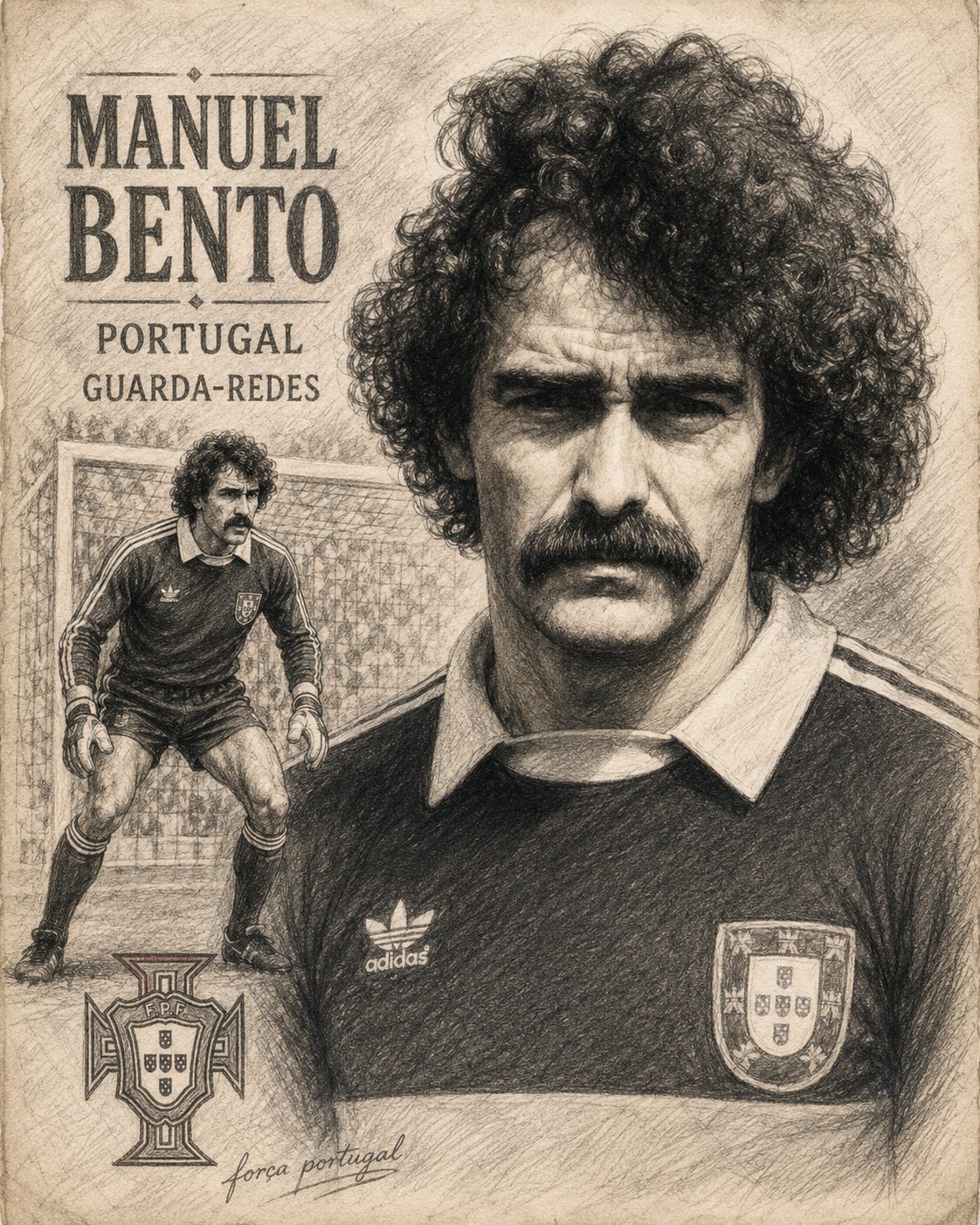
To a squad already stewing in the heat with nothing to do, it was the final insult. Captain Manuel Bento, a thirty seven year old goalkeeper, did something remarkable. He united a dressing room split down the middle by the old Benfica and Porto rivalry and got every man to agree the same thing. Cut us in, or we strike. When they did train, they trained as a protest, turning out half naked with their kit inside out so the sponsors’ logos they refused to promote could not be seen.
Back home the news of what was unfolding in Mexico landed like a bomb. The threat to down tools was debated in Parliament. Politicians lined up to call the players greedy, the prevailing sneer being that pulling on the national shirt should be reward enough, this at a moment when the country was deep in economic crisis. Lurid tales drifted back of private parties and assorted female company, awkward for the several married men in the group. The blazers had picked a fight and were winning the public relations war without breaking sweat. Eventually an uneasy truce was struck and Portugal agreed to play England as planned. Nobody had really backed down. They had simply run out of time.
And then Jose Torres watched from the bench as his side went and won. Against the run of play in Monterrey, Diamantino skipped past a tired Kenny Sansom, reached the byline and rolled it back for Carlos Manuel to tuck home. England’s defending, or lack of it, was embarrassing to watch, but take nothing away from Manuel. Bobby Robson’s England, all huff and squandered chances, had lost their opener. The hero of Stuttgart was now the hero of Monterrey, and for one giddy night the mutineers were national treasures again.
It did not last. The very next day, in training of all places, Bento broke his leg in a collision with a teammate. Quite what a goalkeeper was doing playing in the outfield is a question for the ages. The captain who had held the whole fragile thing together was finished, his career over, replaced in goal by another veteran in Vitor Damas who was nobody’s idea of a solution.
Wlodzimierz Smolarek scored as Poland edged the second game 1-0. That left a simple equation against Morocco in the final group match. England had drawn with the Moroccans, so Portugal needed only the same to go through. Instead they were dismantled, swept away by an African storm.
Morocco won 3-1, Abderrazak Khairi helping himself to two, Diamantino’s late goal a meaningless full stop. Morocco topped the group and became the first African nation to do so. Portugal finished rock bottom, two points, goal difference of minus two, the worst showing in their history at a major finals.
There was no hiding place on the flight home. The squad that had beaten England landed to open hostility from supporters and federation alike, any sympathy long since burned off by ninety minutes of being toyed with by Morocco. Manager Jose Torres walked away. A string of players were banished from the national side, some effectively for good, others jumping before they were pushed. A generation of genuine ability had taken on the suits over a few quid and a sponsor’s shirt, and football, as it tends to, settled the argument on the pitch.
Four decades on, the World Cup returns to the same corner of the world, with Mexico co hosting in 2026. The squads heading there will vet every base camp for altitude, pitch quality and the strength of the Wi-Fi. Somewhere in the small print, you suspect, will be a clause about the bonuses.
Portugal arrive among the second tier of favourites, priced around 8/1 behind Spain and France, and Roberto Martinez faces a happier conundrum than Torres ever did. How to fit ten players around the ageing Ronaldo.
The blazers got their photoshoot, the players got their reputations shredded and Morocco got the only thing that mattered. Saltillo remains football’s purest lesson that the worst time to fight over your wages is the week before you have to beat someone.
Another really good read here. Had no idea about this.
Note there is also a France 2010 World Cup ‘mutiny’ documentary on NetFlix at the moment. Not watched it all but they have all the players and manager interviewed.