
Will Lightning Strike Thrice?

There is a particular flavour of dread reserved for Argentina supporters on the morning of a World Cup opener. Not the ordinary butterflies that arrive with any first game of a tournament. Something heavier than that. Something that, on two separate and painful occasions, turned out to be entirely warranted.
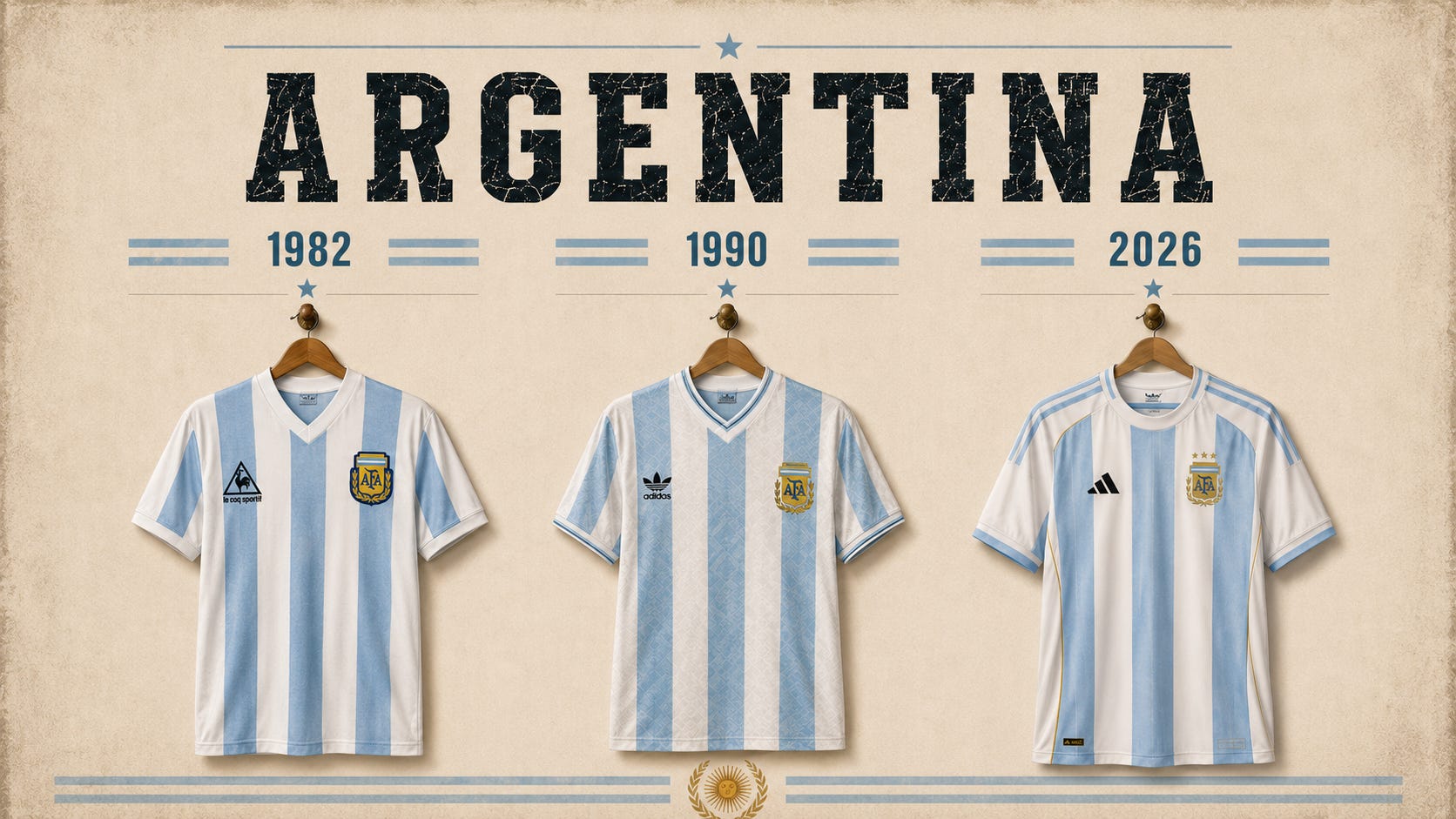

I am too young to remember Argentina’s defeat to Belgium on this day in 1982. On 13 June, the reigning world champions strode out at the Camp Nou to begin the defence of the trophy they had lifted in front of their own people four years earlier. Ninety five thousand souls packed the place out.
Cesar Luis Menotti had kept his job from 1978 and assembled a side dripping with talent. Daniel Passarella, the World Cup winning captain, organised them from the back. Mario Kempes, golden boot winner of that 1978 triumph, led the line. Osvaldo Ardiles stitched the play together. And wearing the number ten at a World Cup for the very first time was a twenty one year old from the dust of Villa Fiorito who was about to become the most famous footballer on the planet. Diego Maradona.
On paper Guy Thys and his Belgians had every reason to lie awake the night before. This was a murderers’ row of South American gold, and the Red Devils, tidy and improving as they were, had no business living with it. In the event, they need not have lost a wink of sleep. Jean Marie Pfaff stood firm in goal, his defenders man marked Maradona until he all but disappeared, and just after the hour Erwin Vandenbergh pinched the only goal of the night.
1-0.
The champions had lost the opening match of their own defence, and the omen was set in stone. Both Argentina and Belgium would later wash out at the second group stage, each parked at the very foot of their table, the holders dethroned without ever truly arriving.

You would think a footballing superpower might learn its lesson. You would be wrong.
Eight years on, we saw the same grim plot, but with a fresh cast. We are talking about Italia 90, the San Siro, a sticky June evening in Milan. I watched on from my fourteen inch colour portable TV. A coat hanger hung out of the back. I was thirteen years old, and I was excited about the World Cup.
Carlos Bilardo stood in the Argentina dugout. Maradona was by now the adopted Neapolitan. Napoli had just snatched the Scudetto from under Milan’s nose. It meant the San Siro met him not with worship but with a downpour of whistles. By his own admission the whole place was bellowing for the opposition.
The opposition, this time, were Cameroon. The assumption ran that Diego, Sergio Batista and the rest would brush the African upstarts aside and get the defence off to a tidy start. That, of course, is not remotely what happened. Cut down to ten men and then nine, the Indomitable Lions simply refused to buckle, and midway through the second half Francois Omam-Biyik climbed into the Milanese sky and sent a header looping down and squirming under the body of Nery Pumpido. 1-0 again. Bilardo would later call it the lowest moment of his career, and you can see why.
So here is the curious, faintly haunting truth that nobody in the Argentina camp will want printed on a fridge magnet. Every single time Argentina have turned up at a World Cup as defending champions, they have lost their opening match. Belgium in 1982. Cameroon in 1990. Two defences, two ambushes, two nations nobody fancied strolling off with the bragging rights.
There is, mind you, a sliver of comfort buried in the second one. Losing to Cameroon did not actually sink the 1990 vintage team. Argentina picked themselves up, scrapped their way out of the group and somehow lurched all the way to the final. An opening stumble need not be fatal. It is merely deeply, memorably embarrassing.

Which brings us, as you knew it would, to Kansas City. Argentina are world champions once more, the gloss of Qatar still on them, and in the small hours of Wednesday morning for those of us squinting at it from this side of the Atlantic, they begin the defence against Algeria at Arrowhead Stadium. The official date reads Tuesday the sixteenth over in America. For British and Irish bodies it will land at the wrong end of the night. Group J houses Austria and the World Cup debutants Jordan too, but it is the opener, and that history, that hands this one its edge.
So what of the Desert Foxes? Vladimir Petkovic, the well travelled former Switzerland boss, has built something genuinely awkward to play against. The talisman remains Riyad Mahrez, the old Leicester and Manchester City wand merchant, plying his trade in Saudi Arabia these days but still able to conjure a goal out of nothing with that left foot. Around him there is proper bite. Mohamed Amoura of Wolfsburg, all darting menace, plundered ten goals in qualifying. Amine Gouiri of Marseille brings a different sort of threat through the middle.
The full back Rayan Ait-Nouri arrives fresh from Manchester City, Ramy Bensebaini lends Borussia Dortmund steel to the back line, and in young Ibrahim Maza of Bayer Leverkusen there is a clear glimpse of the future. There is even a tidy bit of poetry in goal, where Luca Zidane, son of a certain Zinedine, is along for the ride.
Ranked twenty eighth in the world and back at a World Cup for the first time since 2014, this is no team of whipping boys. And here is the detail that ought to send a cold trickle down Argentine spines.
The last time the holders were mugged on opening night, in that Spanish summer of 1982, the side that authored the tournament’s other great shock was Algeria, who battered a flabbergasted West Germany 2-1 before being shoved out of the competition by the notorious Gijon stitch up between West Germany and Austria. The original giant killers are back in town.
The bookies, for what it is worth, make an Algerian win 15/2 (Paddy Power, since you ask). That is not a price you would remortgage the house on, but it is a fair distance short of impossible, and the two men whose names sit in the wrong end of the history books would tell you exactly how little favouritism counts for on opening night.
And hanging over all of it is the little fellow himself. This is, by Lionel Messi’s own telling, his last World Cup, a sixth and final crack at the prize that tormented him for so long before Qatar finally relented. He has nothing left to prove and every reason to crave a gentle evening. A defeat to Algeria would not end his tournament, but it is the one page of the farewell he would surely rather leave blank.
So can they do it? Can Mahrez and his Desert Foxes reach back across the decades, summon the ghost of Gijon and hand the world champions a third opening night humiliation on the spin? Probably not. Almost certainly not. But then nobody gave Belgium a prayer either, and nobody bothered telling Cameroon they were supposed to lose.
The great Maradona will once again take his seat with the gods, as he did in 2022. Argentina will swear blind that lightning cannot strike thrice. They swore the very same in Milan, right up until the ball squirmed under Pumpido and a continent began to dream. Set your alarms accordingly, it’s Argentina. It’s Messi’s last World Cup.